Top 10 Reasons California Buyers Are Moving to North Texas
If you're considering moving from California to Texas, you've probably already heard the usual reasons people make the move: more space, a different cost of living, fewer layers of regulation, and no state income tax.
But when I talk with buyers who are relocating from California, I find that the decision is usually about much more than taxes.
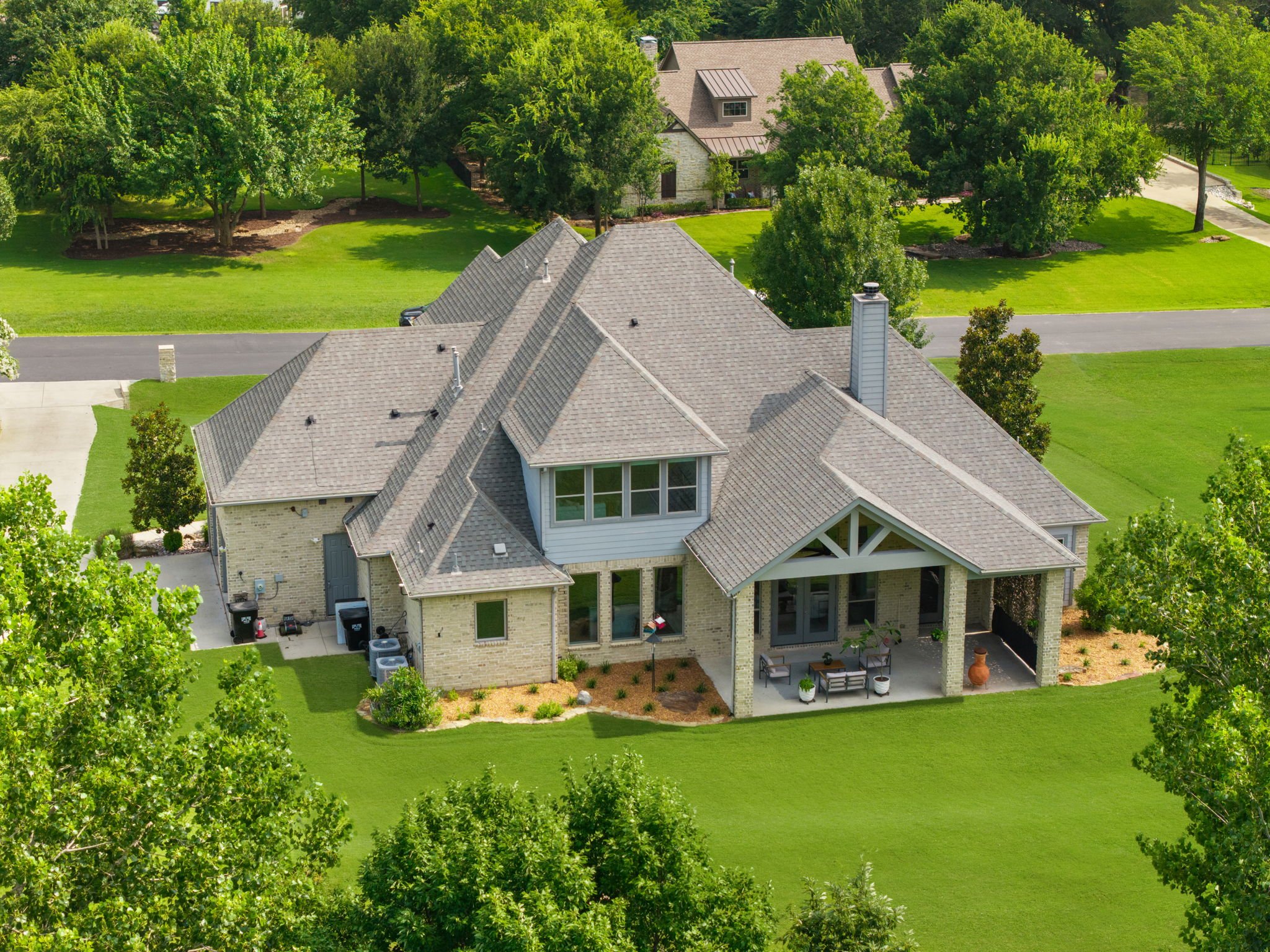
For many luxury buyers, it's about how they want to live.
That's one of the reasons North Texas has become so interesting to California buyers.
And if you're looking specifically around Dallas, McKinney deserves a closer look.
Why Are Californians Moving to North Texas?
California offers an incredible lifestyle, but housing costs and limited land can make certain types of luxury living difficult to achieve.
In North Texas, buyers can often approach the idea of luxury differently.
That changes the experience of living there.
A one-, two- or three-acre property gives you something that's increasingly difficult to find in many California markets: space.
You may have room for a resort-style pool, outdoor kitchen, detached garage, guest accommodations, a garden, a play area for the kids, or simply enough land that your backyard actually feels like a backyard.
And you don't necessarily have to give up convenience to get it.
That's the part of North Texas I think surprises many people who haven't spent much time here.
Here are 10 of the reasons I think North Texas is getting so much attention from California luxury homebuyers.
1. More Home and More Land for Your Money
One of the first things California buyers notice when they begin looking at North Texas real estate is the relationship between the house and the property.
In many traditional suburban communities, the lot is almost an afterthought.
In an acreage community, the land becomes part of the lifestyle.
When I'm showing a buyer an acreage property, I encourage them to look beyond the square footage of the house.
Ask yourself:
What could I actually do with this property?
Could you put in the pool you've always wanted?
Could you have a detached workshop?
Could you create a beautiful outdoor entertaining space?
Could your children play outside without being surrounded by neighboring homes?
Could you sit outside in the evening and actually feel like you have some privacy?
Those are lifestyle questions—not just real estate questions.
And they're a big part of what attracts buyers from California.
2. The Opportunity for True Privacy
I think the definition of luxury is changing.
Luxury used to mean a certain zip code, a large house and an impressive list of finishes.
Today, I hear buyers talk just as much about privacy, space, flexibility, and convenience.
That's particularly true with relocation buyers.
You can still have the beautiful kitchen, designer finishes, primary suite, outdoor living areas and architectural details you'd expect from a luxury home.
But you can also have land.
For buyers coming from California, that combination can be compelling.
3. McKinney Offers a Different Kind of Suburban Luxury
When people first tell me they're moving to Texas, they often start by asking about Dallas.
That's understandable.
Dallas is the economic and cultural center of the region, and the greater Dallas/Fort Worth area offers an enormous number of employment, dining, shopping, entertainment and travel opportunities.
But I often encourage buyers to look beyond the city itself.
McKinney offers a different pace while keeping you connected to the larger DFW area.
Historic downtown, restaurants, shopping, parks and everyday conveniences are all part of the appeal.
And as you move farther out from the most densely developed areas, you'll find something that can be difficult to achieve in a major California market:
larger homesites.
That's where acreage living becomes especially interesting.
4. A Slower Pace Without Giving Up Big-City Access
Acreage Living Doesn't Have to Mean Living in the Middle of Nowhere
This is one of the biggest misconceptions I hear from people who haven't explored North Texas.
When you hear "acreage," you may picture a long gravel driveway, a barn and a house 30 minutes from the nearest grocery store.
That's not necessarily what acreage living looks like around McKinney.
There are communities where you can have an estate-sized homesite and still be relatively close to shopping, restaurants, schools and major roads.
For me, that's one of the most appealing combinations.
You get the feeling of getting away from it all without actually being away from everything.
5. Privacy Becomes Part of the Property
If you're coming from California, privacy may be one of the things you notice immediately when looking at acreage properties.
There's a completely different feeling when your home isn't surrounded by houses on small lots.
A larger property gives you room to create separation.
Trees, landscaping, fencing and the natural layout of the land can all contribute to that sense of privacy.
And if privacy is important to you, I recommend looking at the property from every angle—not just standing in the backyard.
Look at the neighboring properties.
Look at the road.
Look at what is behind the property.
Ask what's likely to happen to surrounding land in the future.
When you're purchasing acreage, you're not just buying the house. You're buying the setting.
6. Gated Communities Can Add Another Layer of Privacy
Some buyers want acreage but also want the sense of security and community that comes with a neighborhood.
That's where gated acreage communities can be particularly appealing.
You can have a larger homesite without giving up the feeling that you're part of an established residential community.
For example, Waterstone Estates in McKinney combines gated community living with estate-sized homesites and community amenities.
It's the type of setting I think California buyers should put on their list when they're looking for a luxury home with land.
And because every buyer has different priorities, I always recommend visiting in person.
Drive through the community.
Look at the homes.
Pay attention to the spacing between properties.
Walk the lot.
Then imagine what your everyday life would actually feel like there.
7. You May Have More Flexibility With Your Property
One of the things I love about acreage living is that the property can evolve with you.
Maybe you move in with young children and want a pool and large backyard.
A few years later, you want a workshop.
Later, you might want a detached guest space or additional outdoor entertaining area.
The possibilities will depend on the property, local regulations, HOA or deed restrictions, utilities and the specific homesite—but acreage generally gives you more physical room to work with.
That's very different from purchasing a traditional suburban lot where you've already used most of the available space.
Before purchasing, though, I always recommend checking the restrictions carefully.
Never assume that because you have acreage, you can automatically build whatever you want.
8. The Texas Lifestyle Can Feel Very Different
There are plenty of reasons people move from California to Texas that have nothing to do with real estate.
But once you're looking at homes, the lifestyle difference becomes very tangible.
In North Texas, outdoor living can be a significant part of the home.
Pools, covered patios, outdoor kitchens, fire features and expansive yards are common features buyers look for.
And on acreage, the outdoor space isn't simply an extension of the house.
It can become its own destination.
For many buyers, that's part of the appeal of building or purchasing a luxury home here.
9. Location Still Matters—Especially When You're Relocating
One mistake I see relocation buyers make is falling in love with a house before understanding the location.
A beautiful home isn't necessarily a good fit if the daily drive doesn't work for your family.
Before you buy, think about:
Where will you work?
How often will you travel?
How close do you want to be to DFW Airport?
Where will your children attend school?
Where do you typically shop?
How often do you go into Dallas? Once a Week? Month?
Do you want restaurants and entertainment nearby?
How much land do you actually want to maintain?
These questions become especially important when you're moving from another state.
You're not just choosing a house.
You're choosing your new daily routine.
10. Don't Assume Every Texas Property Is the Same
This is probably my biggest piece of advice for California buyers.
Don't shop for Texas real estate based solely on square footage and price.
Two homes that look similar online can have very different ownership experiences.
When you're considering an acreage property, I would look closely at:
Utilities
Is the property served by municipal water and sewer, a private system, or another arrangement?
Property taxes
Don't rely on a generic tax estimate. Look at the specific property and understand the applicable taxing entities and exemptions.
HOA and deed restrictions
What can you build? Are there restrictions on outbuildings, animals, fencing, businesses or other improvements?
Schools
Verify the actual school assignment for the property you're considering.
Road access
How convenient is the property for your daily life?
Future development
What's happening around the property? A beautiful view today isn't necessarily guaranteed forever.
Maintenance
Acreage means more land to maintain. For some buyers that's a dream. For others, it's more work than they expected.
These details aren't nearly as glamorous as the kitchen or pool—but they're the things that can make a major difference after closing.
What About Taxes?
Property taxes are one of the first topics many California buyers bring up when they start looking at Texas.
And yes, taxes are an important part of the equation.
But I recommend looking at the entire financial picture, rather than comparing one tax number to another.
Texas does not have a state individual income tax, but property taxes can be significant and vary by location and taxing entities.
That's why I encourage relocation buyers to evaluate the actual property—not just a citywide average.
For acreage and luxury properties, the numbers can be particularly important.
Before making an offer, look at the current tax record, understand exemptions that may apply, and have your real estate and tax professionals help you evaluate your specific situation.
California to McKinney: Why Buyers Should Put It on Their List
If you're moving from California, you may initially be drawn to the larger, more familiar DFW cities.
But I'd encourage you to widen your search.
McKinney can offer something that is increasingly difficult to find in many California markets: the ability to combine a luxury home, meaningful outdoor space and a convenient suburban location.
And for buyers who don't want a traditional subdivision lot, the acreage communities north and northeast of Dallas are worth exploring.
You don't necessarily have to choose between:
privacy OR convenience
luxury OR land
community OR space
In the right location, you can have a little of all of it.
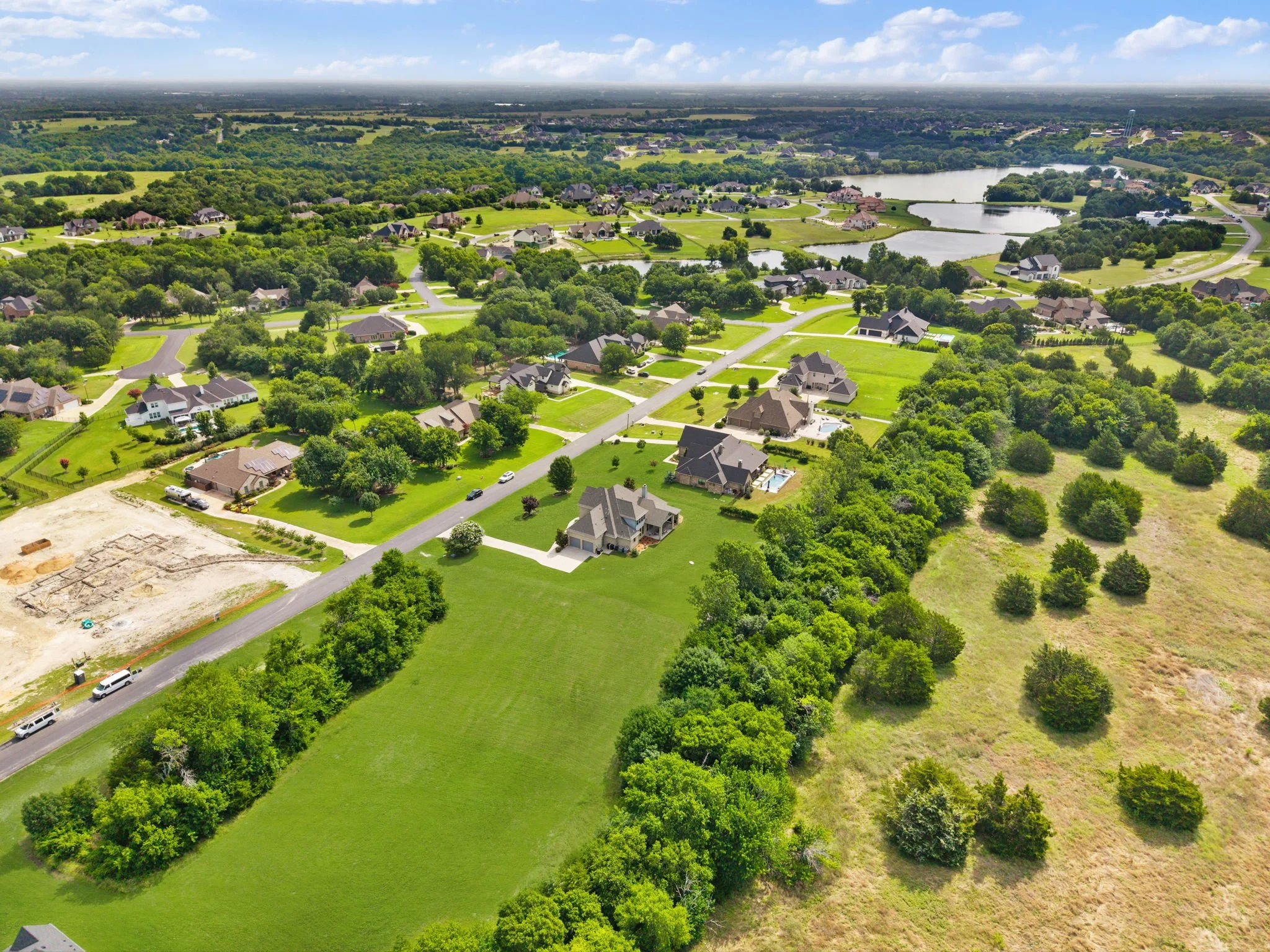
Waterstone Estates McKinney TX
Consider Waterstone Estates
One community I think is particularly interesting for buyers searching for this combination is Waterstone Estates in McKinney.
Waterstone offers estate-sized homesites in a gated setting, along with community amenities that give it more of a neighborhood feel than a collection of rural properties.
For a buyer relocating from California, I think it's worth seeing in person because the experience is difficult to understand from a listing page alone.
The space between homes.
The acreage.
The setting.
The feeling of driving through the gates.
Those details matter.
And if you're considering building rather than buying an existing home, it's also important to understand the community's current building requirements, architectural guidelines and builder options before making a decision.
Thinking About Moving From California to McKinney?
If you're considering a move from California and want to understand what the McKinney area is really like before you start house hunting, I'd be happy to help you narrow down the communities and property types that make sense for your lifestyle.
And if you're looking for a luxury home with acreage rather than a traditional suburban lot, take a look at Waterstone Estates.
Explore the featured Waterstone Estates property below:
Frequently Asked Questions
-
California buyers are attracted to Texas for a combination of housing options, lifestyle, business opportunities, and the ability to find more space. For luxury buyers specifically, North Texas can offer larger homesites, acreage, privacy and amenities that may be difficult or expensive to replicate in many California markets.
-
North Texas offers access to the Dallas-Fort Worth metropolitan area while providing a wide range of suburban and acreage communities. Buyers can find everything from traditional neighborhoods to luxury homes on one or more acres, depending on their preferred lifestyle and location.
-
Californians relocating to Texas choose many different markets, including areas throughout the Dallas-Fort Worth region, Austin, Houston and San Antonio. Within North Texas, communities such as McKinney, Frisco, Prosper, Celina and surrounding areas can appeal to buyers seeking suburban amenities, newer homes and larger properties.
-
For buyers who value space, convenience and access to a major metropolitan area, North Texas can be an appealing alternative to many California markets. The best community depends on factors such as employment, schools, commute, budget and desired lifestyle.
-
McKinney can be particularly appealing to California buyers who want a suburban lifestyle with access to the greater Dallas-Fort Worth area. Buyers interested in larger properties can also explore acreage communities where luxury homes and larger homesites are available.
-
The answer varies significantly by location, property type and market conditions, but North Texas offers a broad range of homes and lot sizes. Buyers who prioritize acreage may find opportunities for larger homesites and more outdoor space than they are accustomed to seeing in many California markets.
-
Yes. Acreage properties can be found in communities throughout the northern and northeastern Dallas-Fort Worth area, including areas around McKinney and other rapidly growing Collin County communities.
-
Acreage properties are available in several North Texas communities, although inventory changes frequently. Buyers should consider the location of the property, lot size, utilities, deed restrictions, taxes, schools and future development—not simply the house itself.
-
Acreage buyers should investigate utilities, property taxes, HOA or deed restrictions, road access, drainage, maintenance requirements, schools and surrounding development. A larger lot can provide tremendous flexibility, but the property should be evaluated as both a home and a piece of land.
-
Yes. North Texas has communities that combine larger homesites with gated entrances and neighborhood amenities. These communities can be attractive to buyers who want privacy and land without giving up the structure and community feel of a residential development.
-
Not necessarily. The total cost depends on the location, land value, house, improvements, taxes, maintenance and other property-specific factors. Acreage can provide more space, but buyers should evaluate the complete cost of ownership rather than comparing home prices alone.
-
The primary benefits are space, privacy and flexibility. Depending on the property and restrictions, buyers may have room for pools, outdoor living areas, gardens, workshops, guest accommodations or other improvements.
-
Start with lifestyle rather than simply comparing home prices. Consider your preferred commute, schools, community type, lot size, access to shopping and restaurants, proximity to airports and how much privacy and outdoor space you want.
-
McKinney offers a variety of luxury housing options, including properties on larger lots and acreage in certain areas. Buyers looking for privacy and estate-style living should consider both the home and the surrounding community when comparing properties.
-
There isn't one answer for every buyer. McKinney, Prosper, Celina, Lucas, Parker, Fairview and other communities in the northern Dallas area can offer different combinations of acreage, luxury homes, schools, amenities and access to Dallas.
-
Potentially, depending on the community and property. Buyers should verify the deed restrictions, HOA requirements, architectural guidelines, minimum home sizes, builder requirements, utilities and permitting rules before purchasing land or an existing homesite.
-
Traditional suburban communities generally offer smaller lots and closer proximity between homes, while acreage properties provide substantially more land and privacy. Acreage living can offer greater flexibility for outdoor spaces and property improvements, although it may also require more maintenance.
-
Many luxury buyers are looking for a combination of high-quality homes, larger properties, privacy and access to major employment and lifestyle centers. North Texas offers multiple communities where buyers can pursue that combination without necessarily living in a dense urban environment.
-
That depends on the lifestyle you're looking for. Dallas offers a more urban experience, while McKinney provides a suburban setting with access to the larger DFW region and opportunities to explore larger homesites and acreage farther from the urban core.
-
Texas does not have a state individual income tax, but property taxes can be significant and vary by property and taxing entities. Buyers should review the actual tax history and applicable exemptions for the property they're considering rather than relying on a general citywide estimate.
-
California buyers are increasingly looking to North Texas for a combination of space, privacy, luxury housing and access to a major metropolitan area. For buyers who want more than a traditional suburban lot, communities around McKinney offer opportunities to find larger homesites, acreage and estate-style properties while remaining connected to the Dallas-Fort Worth area.